
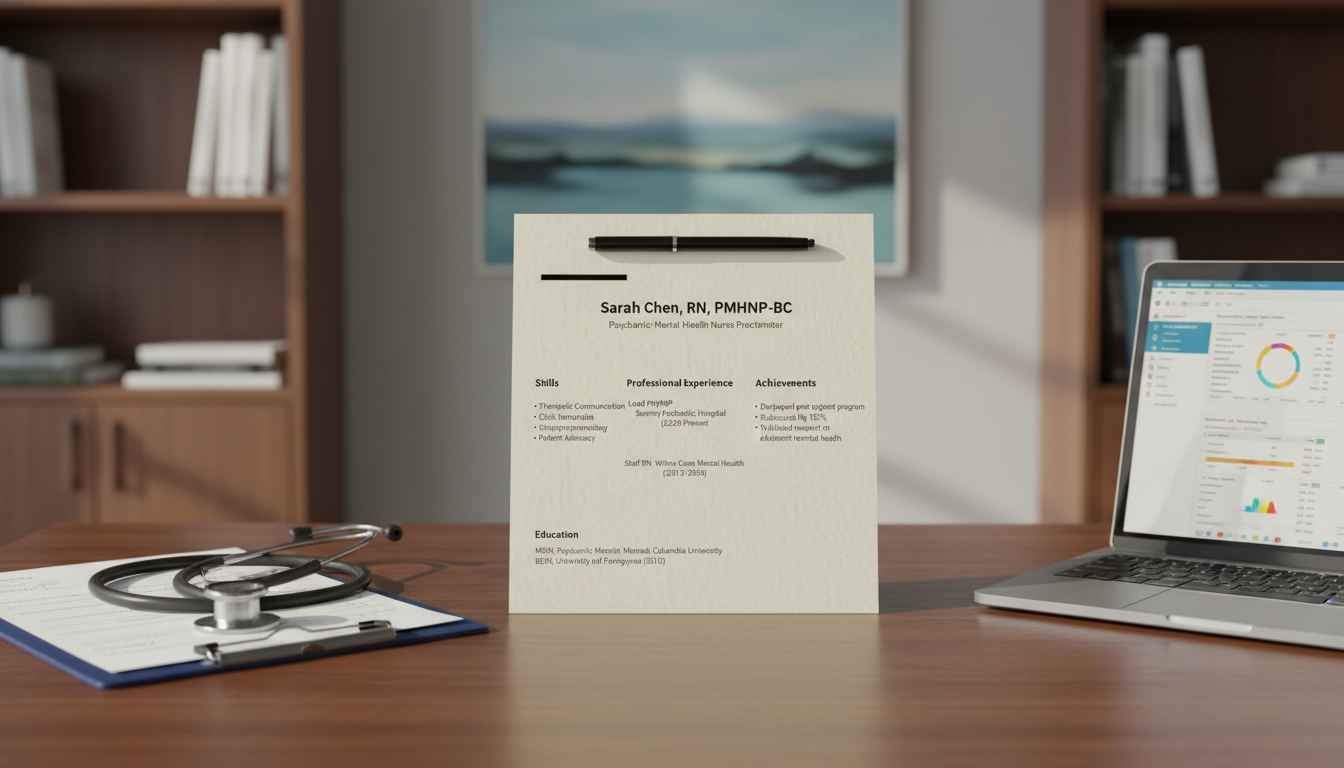
Constructing a resume is much like preparing a delicate soufflé. Every ingredient must be carefully measured, every step meticulously timed, and every nuance thoughtfully executed. In the realm of mental health nursing, the stakes are no less critical: your resume must balance clinical expertise, compassionate patient care, and professional accomplishments in a way that captivates hiring managers while remaining precise and credible.
Today, as I reflect on my consulting experience guiding healthcare professionals, I am reminded that a mental health nurse’s resume is more than a summary of employment history. It is a narrative of dedication, specialized skill, and the human touch that distinguishes competent care from exceptional care. As I set pen to paper – or fingers to keyboard – I consider how best to present this delicate balance.
Structuring Your Resume for Maximum Impact
The foundational structure of a mental health nurse resume begins with clarity and organization. Leading with a professional summary is essential. This summary should encapsulate your years of experience, specialized certifications, and a brief indication of your therapeutic approach. For example, stating that you have “over eight years of experience in inpatient psychiatric care with expertise in cognitive behavioral therapy and crisis intervention” immediately signals both competence and focus.
Following the summary, your professional experience should be laid out in reverse chronological order. Each entry must emphasize measurable outcomes, clinical responsibilities, and collaborative achievements. Avoid generic statements like “provided patient care,” and instead use specific descriptors such as “developed individualized care plans for a caseload of 25 patients, resulting in a 15% reduction in acute psychiatric episodes over six months.” These concrete metrics demonstrate effectiveness and professional impact.
Education and certification sections are non-negotiable, particularly for roles requiring licensure such as Registered Nurse (RN) or Certified Psychiatric-Mental Health Nurse (PMH-BC). Include the institution, degree earned, and relevant coursework or clinical rotations that align with mental health practice. Certifications such as Advanced Cardiac Life Support (ACLS) or Trauma-Informed Care can be listed to underscore readiness for high-stakes clinical scenarios.
Highlighting Skills and Competencies
Skills in mental health nursing extend beyond clinical knowledge; they encompass emotional intelligence, crisis management, and interdisciplinary collaboration. Organizing these skills into technical competencies and soft skills can create a clear narrative for prospective employers. Examples of technical competencies include psychiatric assessment, medication administration, and electronic health record documentation. Soft skills might include active listening, de-escalation techniques, and patient advocacy. A well-rounded skill section conveys both proficiency and humanity.
It is also valuable to integrate professional accomplishments that illustrate leadership or innovation. For instance, leading a quality improvement initiative that reduced patient wait times in the mental health unit by 20% is a tangible achievement that communicates initiative and results-oriented focus. Similarly, participating in community outreach programs or research projects can underscore a commitment to the broader field of mental health nursing.
Common Mistakes
Many mental health nurses fall into pitfalls that dilute their resume’s impact. Avoid lengthy paragraphs without quantifiable achievements, overloading technical jargon that may alienate HR personnel, or failing to tailor the resume to the specific role. Generic statements, inconsistent formatting, and missing licensure details are frequent errors that can eliminate even highly qualified candidates from consideration.
Who Should Avoid This Approach
While this structured approach benefits most mental health nursing professionals, it may not be ideal for those early in their careers with limited clinical exposure. Entry-level nurses might instead focus on internships, volunteer work, and clinical rotations to demonstrate potential and adaptability. Likewise, professionals whose careers are heavily research-focused may need a curriculum vitae rather than a traditional resume to adequately showcase publications and academic contributions.
Practical Examples and Templates
Examining actual mental health nurse resume examples provides clarity in translating these principles into action. Consider the following template framework:
Professional Summary: Over 10 years of psychiatric nursing experience in inpatient and outpatient settings. Adept at crisis intervention, patient-centered care, and interdisciplinary collaboration.
Professional Experience:
Mental Health Nurse, Riverbend Psychiatric Center, 2016–2023
Developed individualized care plans for 30 patients weekly, resulting in improved patient engagement scores. Collaborated with psychiatrists, social workers, and family members to ensure comprehensive care. Led de-escalation training sessions for junior staff.
Mental Health Nurse, Green Valley Community Clinic, 2013–2016
Implemented cognitive-behavioral therapy sessions, reducing patient relapse rates by 12%. Maintained accurate and timely electronic health records in compliance with HIPAA standards.
Education and Certifications:
Bachelor of Science in Nursing, University of Health Sciences, 2012
Certified Psychiatric-Mental Health Nurse (PMH-BC)
Advanced Cardiac Life Support (ACLS)
Skills:
Psychiatric Assessment, Medication Administration, Cognitive Behavioral Therapy, Crisis Intervention, Patient Advocacy, Interdisciplinary Communication, Trauma-Informed Care
Notice that each segment integrates specific achievements, quantifiable results, and skills relevant to mental health nursing. This level of detail demonstrates not only competence but also a reflective and professional approach to patient care.
For professionals seeking guidance in integrating wellness and holistic care into their mental health practice, resources such as Earth Mama Organics offer insights into natural approaches that complement conventional therapies. Incorporating knowledge of complementary care can further differentiate your resume, signaling a holistic understanding of patient well-being.
Optimizing for Applicant Tracking Systems
Modern healthcare recruitment often relies on applicant tracking systems (ATS), making keyword optimization crucial. Use specific terminology from the job description, such as “psychiatric care plan,” “mental health counseling,” or “patient outcome tracking,” to ensure your resume is appropriately flagged. Avoid keyword stuffing; instead, integrate terms naturally within your professional narrative and skills sections.
Final Reflections
Constructing a mental health nurse resume requires careful balancing of technical expertise, professional achievements, and empathetic care. Like crafting a fine recipe, each element – experience, education, skills, and accomplishments – must be thoughtfully measured and harmonized. When executed correctly, your resume becomes more than a document; it becomes a compelling testament to your dedication, expertise, and readiness to make a measurable impact in the lives of those you care for.
For those aspiring to elevate their careers in mental health nursing, the journey begins not only with experience but also with the clarity and precision with which you present your professional story. By emphasizing measurable outcomes, specialized competencies, and compassionate practice, your resume can open doors to advanced roles, leadership opportunities, and meaningful contributions to the field.
