The Urgent Need for Peer Learning in Modern Classrooms
In today’s rapidly evolving educational landscape, the ability to foster peer learning and collaboration among students has become an urgent necessity rather than a mere recommendation. Schools are no longer just about delivering content; they are about preparing students to navigate complex, interconnected worlds where teamwork, communication, and mutual understanding are paramount. Traditional lecture-based methods are increasingly insufficient, leaving students disengaged, uninspired, and ill-prepared for real-world challenges. Educators must act now to embrace strategies that cultivate active collaboration, because every day that passes without this approach risks leaving students behind. Imagine a classroom buzzing with energy, students exchanging ideas, debating theories, and collectively solving problems. This isn’t a hypothetical – it is a tangible vision of what efficient education looks like when peer learning is prioritized. Schools that fail to adopt these methods may see a drop in engagement, retention, and overall academic achievement. The FOMO is real, and it’s time for educators, administrators, and policy makers to step into a model where collaboration is not just encouraged, but essential.
Creating Structured Collaborative Spaces
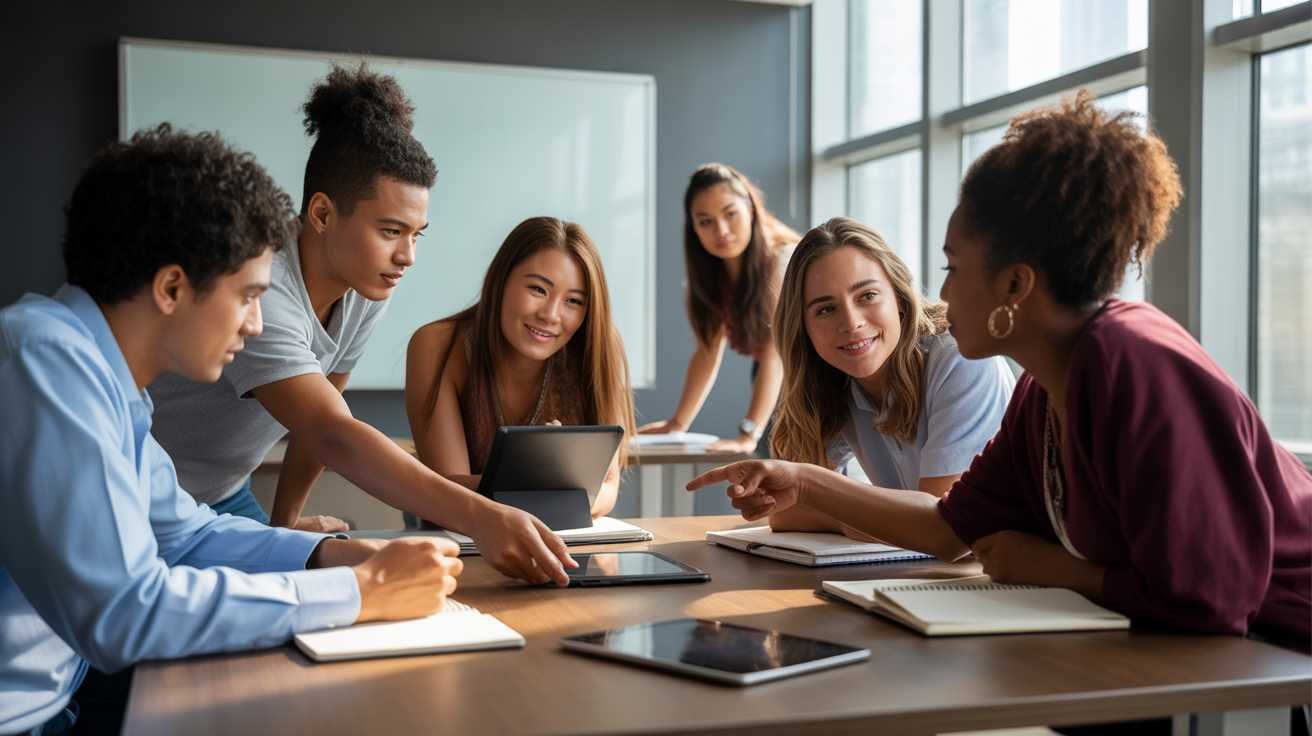
Effective peer learning thrives in environments where structure and flexibility coexist seamlessly. Classrooms must be designed to promote interaction, where seating arrangements, resource accessibility, and activity planning encourage students to work together naturally. Think of circular seating arrangements that allow eye contact and ease of communication, or designated zones for group work that reduce distractions and foster focus. Structured collaborative spaces provide students with tangible cues that learning is a shared journey. When students enter these spaces, they instinctively understand that collaboration is expected, valued, and rewarded. Real-world case studies from schools in Finland and Singapore demonstrate that classrooms optimized for collaboration significantly increase student engagement, information retention, and problem-solving abilities. Educators who integrate structured collaborative spaces report higher levels of participation and greater satisfaction among students, creating a dynamic cycle that enhances efficiency in education. By establishing these thoughtfully designed environments, teachers not only encourage interaction but also subtly reinforce critical thinking, empathy, and accountability among learners, making the classroom a vibrant hub of shared intellectual exploration.
Leveraging Technology for Collaborative Learning
Technology is no longer an optional tool; it is a vital conduit for fostering collaboration and increasing efficiency in education. Platforms such as interactive discussion boards, cloud-based document sharing, and real-time feedback tools transform passive learning into active, dynamic engagement. Imagine students in different physical locations brainstorming together on a digital whiteboard, their ideas visually intertwined, evolving organically through mutual input. This level of connectivity accelerates comprehension, reinforces accountability, and makes learning a visible, communal process. A study by the International Society for Technology in Education found that classrooms integrating collaborative technology saw a 35% increase in student participation and a 28% improvement in problem-solving performance. Beyond engagement, technology also provides educators with data-driven insights into group dynamics, helping identify areas where students may need additional support or where certain groups excel. By weaving digital tools into daily learning routines, educators can create rich, multi-layered collaborative experiences that heighten efficiency in education and ensure no student falls behind in the rapidly changing academic landscape.
Peer Mentorship Programs That Drive Success
Establishing structured peer mentorship programs is a highly effective method for embedding collaboration into the student experience. When older or more experienced students guide their peers, a dual layer of learning occurs: mentors reinforce their own understanding while mentees gain practical insights and confidence. This relational dynamic mirrors real-world workplaces where knowledge sharing and mentorship drive both individual and organizational success. Schools that have implemented peer mentorship programs report measurable gains in both academic performance and emotional well-being. For example, a high school in California noted a 22% increase in average grades after implementing a cross-grade mentorship system, alongside reports of improved self-esteem and reduced anxiety among mentees. Peer mentorship cultivates a sense of responsibility, accountability, and empathy – qualities that traditional instruction alone rarely instills. By harnessing the power of mentorship, schools can significantly boost efficiency in education, ensuring that every student benefits from personalized guidance, immediate feedback, and a supportive community that accelerates learning at every level.
Collaborative Problem-Solving Projects
Nothing ignites engagement and deep learning like real-world problem-solving tasks that require students to collaborate intensely. Projects rooted in authentic challenges – be it designing sustainable solutions for local communities or creating innovative presentations for global issues – push students to think critically, communicate effectively, and negotiate ideas in real-time. The sensory richness of such projects – the tactile experience of materials, the vibrant energy of brainstorming sessions, and the dynamic interplay of voices – creates an unforgettable learning environment. Research by the National Education Association shows that project-based collaborative learning increases retention rates by up to 40%, with students demonstrating stronger analytical and creative skills. These projects not only enhance academic competence but also nurture essential soft skills like adaptability, resilience, and emotional intelligence. By embedding collaborative problem-solving into curricula, schools can dramatically enhance efficiency in education, equipping students with the skills to tackle complex tasks with confidence, precision, and creativity, while simultaneously fostering a profound sense of community and shared purpose.
Encouraging Reflective Peer Feedback
Peer learning reaches its full potential when students are encouraged to give and receive constructive feedback. Reflective peer feedback cultivates critical thinking, self-awareness, and communication skills, turning evaluation into a collaborative, rather than hierarchical, process. Students learn to articulate strengths and areas for improvement with empathy and precision, creating a culture where growth is celebrated and mistakes are viewed as learning opportunities. Educational psychologists emphasize that students who actively engage in reflective feedback exhibit greater retention and deeper understanding of concepts, leading to measurable gains in efficiency in education. Imagine a classroom where every critique is a carefully considered insight, every suggestion a bridge to improvement, and every exchange a learning experience that builds both skill and confidence. The cumulative effect of these interactions is profound: students not only internalize knowledge more effectively but also develop the emotional intelligence necessary to thrive in diverse, collaborative environments beyond school walls.
Gamifying Collaboration to Increase Engagement
Gamification has emerged as a powerful strategy to boost peer collaboration and student motivation simultaneously. By incorporating elements such as point systems, team challenges, and collaborative quests, educators can transform ordinary classroom activities into immersive experiences that spark competition, camaraderie, and creativity. Imagine students racing against time to solve a complex mathematical problem together, their collective excitement palpable, their focus laser-sharp, and their ideas bouncing energetically from one mind to another. Gamification taps into intrinsic motivation, making students not only eager participants but also proactive contributors to group success. Studies conducted by the EdTech Research Group reveal that gamified collaborative learning environments can enhance engagement by over 50%, while simultaneously improving information retention and problem-solving skills. By thoughtfully applying gamification, schools can foster a contagious enthusiasm for collaboration, reinforcing efficiency in education while creating memorable, high-energy learning experiences that leave students eager for more.
Integrating Interdisciplinary Teamwork
Collaboration reaches new heights when students are encouraged to work across disciplines, merging perspectives, methodologies, and skill sets to tackle complex challenges. Interdisciplinary teamwork mirrors real-world scenarios, where problems rarely exist within the confines of a single subject. When students from science, humanities, and arts collaborate on projects, the resulting synergy sparks innovation and broadens intellectual horizons. Imagine a team of students designing a sustainable urban garden: the botanists identify optimal plant species, the mathematicians calculate growth patterns, the artists craft engaging visual presentations, and the communicators articulate the vision to the community. This holistic approach not only enriches learning but also highlights the practical application of knowledge, demonstrating efficiency in education at its highest form. Educators who implement interdisciplinary collaboration consistently observe heightened creativity, improved problem-solving skills, and stronger engagement, proving that blending disciplines can unlock a level of understanding and mastery that traditional siloed approaches simply cannot achieve.
Fostering a Culture of Accountability and Recognition
For peer learning and collaboration to flourish, it is essential to cultivate a culture where accountability and recognition are integral. Students must understand that their contributions matter and that collaborative success depends on individual commitment. Clear expectations, consistent monitoring, and meaningful acknowledgment of achievements reinforce this culture, ensuring that every participant feels valued and motivated. Schools that prioritize accountability and recognition witness tangible improvements in both group performance and individual growth. According to a study by the Journal of Educational Psychology, classrooms with structured recognition systems report a 30% increase in participation and a notable rise in collaborative problem-solving efficiency. Recognition can take many forms – from formal awards to verbal praise and public acknowledgment of effort and achievement – creating a feedback loop that drives engagement and instills pride. By embedding these principles, educators can build a resilient, high-performing community of learners who are not only efficient in education but also empowered, motivated, and eager to excel together.
Implementing Continuous Professional Support for Educators
The final piece of the collaborative learning puzzle lies in continuous professional support for educators. Teachers require training, resources, and responsive support systems to implement and sustain strategies that encourage peer learning effectively. Schools that invest in ongoing professional development see measurable improvements in teaching quality, student engagement, and overall classroom dynamics. This support includes access to best-practice guides, mentorship from experienced educators, and real-time feedback on collaborative learning initiatives. By equipping teachers with the tools and confidence to facilitate rich peer interactions, schools ensure that the benefits of collaboration are not sporadic but consistently realized across the curriculum. A survey conducted by the National Center for Education Statistics reveals that educators who receive targeted professional support report a 25% increase in student collaboration effectiveness. Ultimately, investing in teacher development reinforces efficiency in education, ensuring that every classroom becomes a vibrant ecosystem where peer learning thrives, students flourish, and the future of education evolves in a profoundly inclusive and effective direction.
Time is of the essence. Schools, educators, and students cannot afford to lag behind in embracing these strategies for peer learning and collaboration. By integrating structured spaces, technology, mentorship, problem-solving projects, reflective feedback, gamification, interdisciplinary teamwork, accountability, and professional support, the potential for improved efficiency in education becomes limitless. Act now to transform classrooms into dynamic hubs of collaborative excellence and ensure every student experiences the full power of engaged, interactive learning. For immediate access to comprehensive tools and resources that facilitate peer learning success, explore these verified solutions today and secure your school’s position at the forefront of modern education.
