
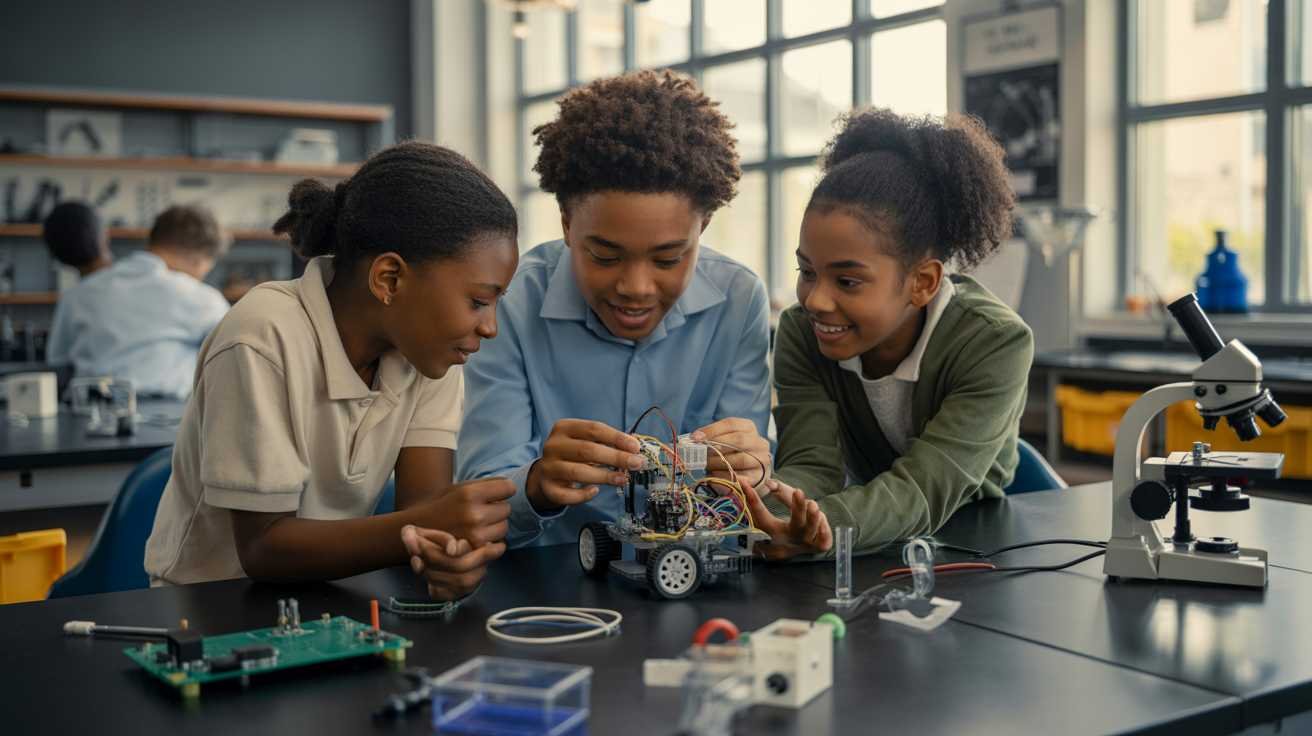
In a world where information is at our fingertips, the ability to think critically and solve problems has never been more crucial. Yet, traditional methods often fall short in cultivating these skills. Enter hands-on science projects – dynamic, engaging, and transformative experiences that not only captivate the imagination but also sharpen the mind. These projects are not just about mixing chemicals or observing reactions; they are gateways to developing essential life skills. And here’s the catch: the window to harness these benefits is limited. Don’t let this opportunity slip away.
The Power of Experiential Learning
Imagine a classroom where students are not passive recipients of information but active participants in their learning journey. Hands-on science projects transform this vision into reality. By engaging directly with materials and phenomena, learners move beyond rote memorization to genuine understanding. This approach taps into the natural curiosity of students, prompting them to ask questions, make predictions, and test hypotheses. The tactile nature of these activities makes abstract concepts tangible, fostering deeper comprehension and retention. Moreover, the process of experimentation teaches resilience, as students learn to embrace failure as a stepping stone to success. The urgency to integrate such methodologies into education is palpable; the longer we delay, the more we risk stifling the innate inquisitiveness of learners.
Critical Thinking Through Scientific Inquiry
At the heart of scientific exploration lies critical thinking – the ability to analyze information, evaluate evidence, and draw reasoned conclusions. Hands-on science projects are fertile ground for cultivating this skill. When students design experiments, they must consider variables, control conditions, and anticipate outcomes. This process mirrors real-world problem-solving scenarios, making the learning experience not only relevant but also practical. Take, for instance, a project where students investigate the effects of various substances on plant growth. They hypothesize, test, observe, and conclude – engaging in a cycle of inquiry that mirrors scientific research. The urgency to adopt such inquiry-based learning is clear; without it, we risk producing individuals who can recall facts but struggle to apply knowledge critically.
Problem-Solving in Action
Problem-solving is more than a skill; it’s a mindset. Hands-on science projects immerse students in situations where they must identify problems, devise solutions, and iterate based on results. Whether it’s building a bridge from spaghetti or creating a homemade volcano, these activities challenge students to think creatively and critically. The iterative nature of these projects – test, evaluate, refine – mirrors the real-world process of troubleshooting and innovation. The urgency to foster such problem-solving abilities is pressing; in an ever-evolving world, the capacity to navigate challenges with ingenuity is indispensable. Delaying the integration of such experiences into education means postponing the development of these vital skills in future generations.
Engaging the Senses for Deeper Learning
Learning is most effective when it engages multiple senses. Hands-on science projects do just that, creating immersive experiences that captivate students’ attention and enhance understanding. The vibrant colors of chemical reactions, the textures of materials, the sounds of bubbling mixtures – all these sensory inputs create a rich tapestry of learning. Such multisensory engagement not only makes learning more enjoyable but also aids in memory retention and concept comprehension. The urgency to incorporate sensory-rich experiences into education is evident; without them, we risk offering a one-dimensional learning experience that fails to fully engage students.
Real-World Applications and Relevance
One of the most compelling reasons to incorporate hands-on science projects into education is their direct connection to the real world. These projects demonstrate how scientific principles apply to everyday life, making learning relevant and meaningful. For example, constructing a simple circuit can lead to discussions about electricity in homes, while studying the properties of materials can relate to engineering and construction. Such projects bridge the gap between theoretical knowledge and practical application, preparing students for the complexities of the real world. The urgency to make learning relevant is undeniable; without it, students may struggle to see the value in their education, leading to disengagement and apathy.
Collaborative Learning and Social Skills
Hands-on science projects often involve teamwork, requiring students to collaborate, communicate, and negotiate. These experiences are invaluable in developing social skills and fostering a sense of community. Working together to solve problems teaches students the importance of listening, sharing ideas, and respecting diverse perspectives. Such collaborative efforts mirror real-world scenarios where teamwork is essential for success. The urgency to promote collaborative learning is pressing; in an increasingly interconnected world, the ability to work effectively with others is a critical skill that cannot be overlooked.
Building Confidence Through Discovery
There’s a unique satisfaction that comes from discovering something firsthand. Hands-on science projects provide students with opportunities to make their own discoveries, boosting their confidence and fostering a sense of accomplishment. Whether it’s observing the growth of a plant from seed to bloom or witnessing a chemical reaction firsthand, these experiences instill a sense of wonder and pride. This confidence extends beyond the science lab, empowering students to approach challenges in other areas of life with a positive and proactive mindset. The urgency to cultivate such confidence is clear; without it, students may hesitate to take initiative or embrace new challenges, limiting their potential.
Integrating Technology and Innovation
In today’s digital age, technology plays a pivotal role in education. Hands-on science projects offer opportunities to integrate technology, enhancing learning experiences and preparing students for future careers. Utilizing digital tools to collect data, simulate experiments, or present findings introduces students to the technological aspects of scientific work. Such integration not only enriches the learning experience but also equips students with skills essential for the modern workforce. The urgency to incorporate technology into education is undeniable; without it, we risk preparing students for a past era, ill-equipped for the demands of the future.
Conclusion: The Imperative of Hands-On Learning
The benefits of hands-on science projects in developing problem-solving and critical thinking skills are profound and far-reaching. These projects engage students in active learning, making education a dynamic and impactful experience. The urgency to integrate such methodologies into educational systems is pressing; the longer we delay, the more we risk hindering the development of essential skills in future generations. Educators, policymakers, and communities must prioritize hands-on learning to ensure that students are equipped to navigate and succeed in an increasingly complex world. The time to act is now; the future of education depends on it.
If you want to enhance your teaching methods, consider how STEM kits can align with Massachusetts Educational Standards to make learning physics, chemistry, and math not just informative but also engaging and interactive.
