
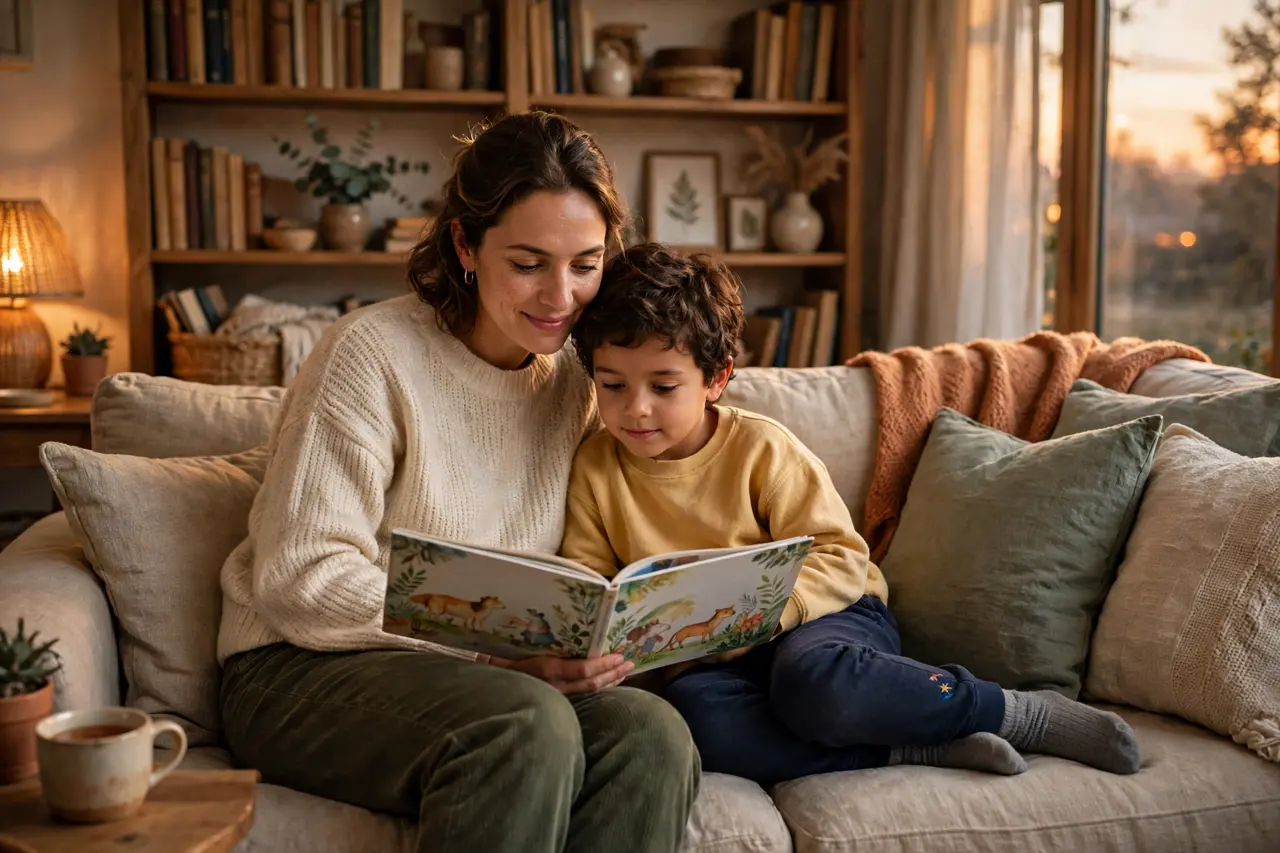
Ask any teacher what separates children who thrive at school from those who struggle, and reading almost always comes up. Children who read every day build bigger vocabularies, stronger comprehension, and more confidence in every subject, not just English. The good news is that you do not need expensive programmes or hours of free time to get these benefits. A simple daily reading routine, repeated consistently, does most of the work.
This guide shows you how to build a reading routine that fits real family life: how long to read for, when to fit it in, how to choose books your child actually wants to open, and what to do when motivation dips. Start small, stay consistent, and the habit will grow with your child.
Why a Daily Reading Routine Matters
Reading is a skill that strengthens with use, like a muscle. Short, regular practice beats occasional long sessions because children consolidate what they learn between readings and because the routine itself becomes a cue: same time, same place, book in hand. Daily reading also exposes children to far more words and sentence patterns than everyday conversation provides, which quietly supports writing, spelling, and general knowledge.
Beyond academics, a shared reading routine gives you calm, focused time together. That connection supports the wider development described in our guide to supporting emotional intelligence in kids: children who feel secure and listened to are more willing to attempt harder books and stick with them.
How Long Should Children Read Each Day?
There is no magic number, but a practical target is 15 to 20 minutes a day for primary-aged children, rising gradually for older ones. For very young children, two or three short picture books are plenty. What matters most is regularity: ten minutes every single day will do more than an hour once a week.
If your child resists, shrink the target rather than abandoning it. Five focused minutes today, building to ten next week, protects the habit while confidence grows. A visible chart or calendar where your child marks off each day’s reading adds a satisfying sense of progress, similar to the approach in our article on teaching responsibility through fun daily activities.
Choose the Right Time and Place
Anchor reading to something that already happens every day: after breakfast, straight after school with a snack, or in bed before lights out. Bedtime reading is a family favourite because it doubles as a calming wind-down, but the best slot is the one your family can protect consistently. Weekends and holidays count too; keeping the routine going when school stops is what turns it into a lifelong habit.
Create a small reading spot: a cushion, a beanbag, or a corner of the sofa with good light and a little pile of books within reach. Keep screens out of that spot. If evenings are chaotic, our guide to screen time rules for kids can help you carve out protected time by setting clear boundaries on devices first.
Pick Books Your Child Wants to Read
The fastest way to kill a reading routine is to force books a child finds boring or too difficult. Let your child choose most of their reading material, even if that means comics, joke books, football annuals, or the same favourite story for the tenth time. Re-reading builds fluency, and enjoyment is what brings them back tomorrow.
Use the five-finger test together: if a page has more than five words your child cannot read or understand, the book is probably too hard for independent reading right now, though it may still work beautifully as a read-aloud. Visit the library regularly and let your child browse freely. Rotating fresh books through the house keeps curiosity alive, and talking about stories supports the growth areas covered in our article on supporting your child’s growth in academic, social, and emotional areas.
Read Together, Then Hand Over
For younger children and new readers, read aloud daily and let them follow the words with a finger. Take turns with pages or paragraphs as they grow more confident, and pause to talk: ask what might happen next, why a character acted that way, or which part was funniest. These small conversations build comprehension far more than silently finishing pages.
Gradually hand over independence. A child who reads alone for part of the session and shares a few pages with you gets both practice and connection. Encourage them to retell the story in their own words afterwards; retelling is a powerful comprehension check and links neatly with the skills in our guide to encouraging self-expression, creativity, and problem-solving skills.
Keep the Routine Alive When Motivation Dips
Every routine hits flat patches. When that happens, change the format before you change the goal: swap in a magazine, an audiobook for a car journey, a cookbook to read and cook from together, or a family read-aloud where everyone takes a character’s part. Visiting a bookshop and letting your child pick one book of their own can restart enthusiasm for weeks.
Praise effort and consistency rather than speed or level. Noticing that your child read every day this week, or tackled a harder chapter, builds the self-belief that sustains habits. These small, steady wins also nurture the qualities discussed in our article on encouraging independence, responsibility, and positive behaviour in children.
A Routine That Grows With Your Child
A daily reading routine is not another chore to squeeze into family life; it is one of the highest-return habits you can build. Fifteen calm minutes, a book your child chose, and the same comfortable spot each day will compound quietly into vocabulary, confidence, and a genuine love of stories. Start tonight, keep it small, and let consistency do the heavy lifting.
Reading Routines for Older Children and Reluctant Readers
As children grow, the routine should change shape rather than disappear. Older children may prefer reading alone in bed for twenty minutes before sleep, choosing their own novels, non-fiction, or graphic novels. Your role shifts from reading partner to interested audience: ask what the book is about, which character they like, and whether they would recommend it. For reluctant readers, connect books to existing interests, whether that is football, space, cooking, or gaming, and try audiobooks on journeys so stories stay part of everyday life. Short magazine articles, poetry, and series books with cliff-hanger endings all lower the barrier to starting. The goal stays the same at every age: regular, enjoyable reading that your child expects and, eventually, chooses for themselves.
